
This case begins in Amersfoort, the Netherlands, in 2014. It involves two Dutch girls, Lisanne Froon, aged 22 and Kris Kremers, aged 21. The girls worked together at the Den Kleinen Hop restaurant in Amsterdam, where they had been working endlessly, and saving for six months to go on the journey of a lifetime to Panama, where they had intended to stay for 6 weeks with a host family, volunteering to work with local children and learning some Spanish. Unfortunately, the much-anticipated trip would take a turn, with sinister events leading to many unanswered questions. Possibly the biggest. What went so wrong, that these two girls would never be seen alive again?
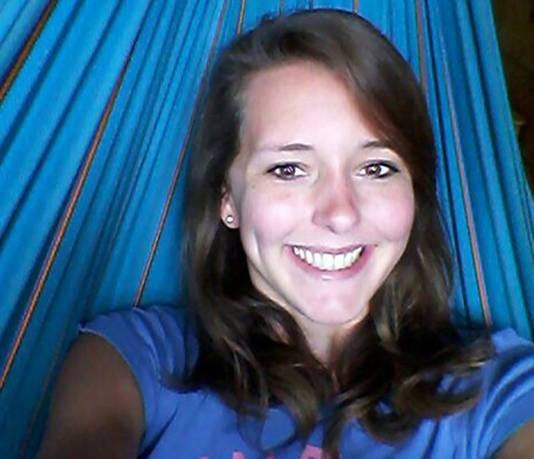
Lisanne Froon, was described as aspiring, optimistic, intelligent, and a passionate volleyball player and the more reserved of the two. She had graduated with a degree in Applied Sciences from Deventer the previous September.

Kris Kremers on the other hand, Sparkling and extroverted, being described as open and creative with striking red hair. She had just completed her studies in cultural social education, specializing in art education at the University of Utrecht.
The trip was intended to be a reward for Kris, for graduating. She had developed a love for South-America after a holiday in Peru with her parents and had encouraged Lisanne that this is where they should travel. Lisanne had never travelled further than southern Germany with her parents.
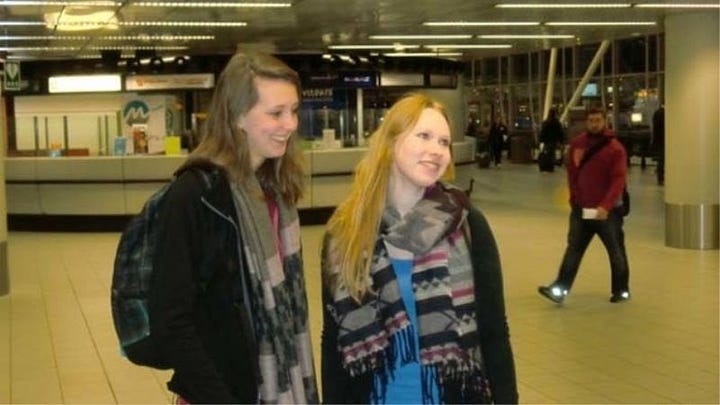
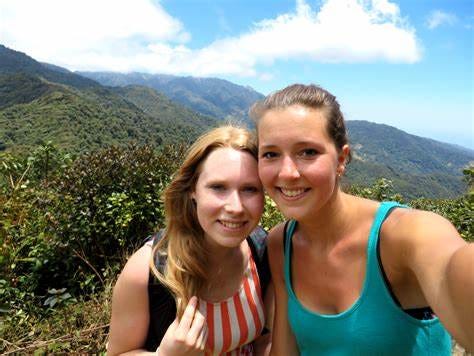
On March 15, 2014, the much-anticipated day had arrived. The girls headed to the Schiphol Airport with their families, where they would say their goodbyes, unknowingly for the last time. As you can see from the photos, the girls were excited to begin their holiday, with weeks of freedom and exploring ahead.
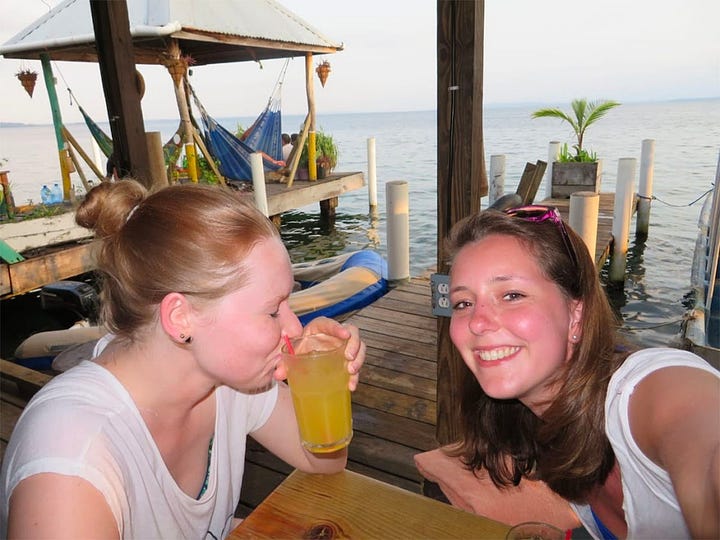
The girls boarded a plane from Amsterdam to Costa Rica. From there they travelled to Bocas del Toro. The girls first visited the coast of Panama and had a good time, learning some Spanish, enjoying the beach, food, drinks, sightseeing and dancing in the evening. It was here that they met two Dutch young men, who they spent a lot of time with during the first few days.

When Kris and Lisanne arrived in Boquete two weeks later on March 29th — a city close to the western border in which they would be staying with their host family. They travelled to the school where they would be volunteering, where the staff told them that they could not work there that week, as planned. They had no place for them now, and the girls had to come back a week later.
Hans Kremers, Kris’ father, also stated later on, that the Spanish language school in Boquete — who had organized the volunteer work — had even sent an email 3 days before they were supposed to start their volunteer work, confirming their start on the following Monday. Lisanne stated in her diary of their disappointment at being sent away and had wrote of how rude the staff had been to them.
The girls stayed with a local host family in Alto Boquete for four weeks. Miriam Guerra often houses international students and had a room for the girls with its own entrance separate from the main house. Miriam described the girls as smart and shy. She stated that in the first evening there, Kris read a book in the girls bedroom whilst Lisanne kept Miriam company in the living room. Despite not speaking very good Spanish, Lisanne managed to explain to Miriam that they didn’t yet know what to do with their newfound free time. Miriam recalled that Lisanne had coughed a lot, as she was “asthmatic”. Lisanne had also not been feeling too well and also had a sore throat.
Miriam brought them breakfast at their room on Sunday March 30th, their second day in Boquete, and learned that the girls planned to walk around Boquete to learn more about the place. Photos show them out and about in Boquete that Sunday. They came back home before sunset.
On April 2nd, the girls had booked a hike with a local tour guide, to guide them through the famous and Pianista Trail; a popular hiking trail amongst tourists to Panama. However, as the girls had no plans for the 1st April, they decided to go ahead with the trail a day early, without the tour guide.
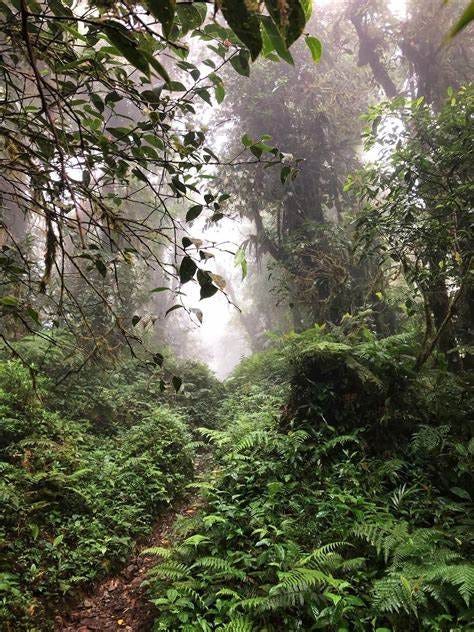
The Pianista Trail brings walkers to a summit at around an 8 kilometre distance from Boquete, passing clouded jungle forests and waterfalls along the way.
A taxi is said to have picked them up and brought them to the start of the trail. The taxi driver declared that he dropped them off in the afternoon around one thirty PM but the clock on their digital camera suggests they started around 11:00 in the morning on their hike. This is only one of many inconsistencies in this sinister story.
Lisanne and Kris wore light clothing on the day; shorts and a tank top, and didn’t bring much with them. They had brought one small bottle of water between them, indicating that they only planned to be out for a short while.
Residents at the start of the trail have later declared that they warned the girls not to walk up there by themselves, but the girls waved their worries away and there was word that they took a local dog along, who belonged to from restaurant owners at the start of the trail, for company. Suspicion rose however, when the dog later returned to Boquete that same day, without the two girls.
The host family is said to have searched the area surrounding their home once they realised that their guests had not come back in the evening, but found no sign of the girls. Giving them the benefit of the doubt, the host family decided they would wait until the morning to continue their search.
As stated earlier, Kris and Lisanne were scheduled with a local guide for a private walking tour of a national park near Boquete the day after, April 2nd, but they never showed up for this appointment. Because of this, he went to look for the girls at the nearby host family they stayed. Realising that the girls were now missing, he and a staff member from the Language School contacted the authorities and the girls’ families. The next morning, on Thursday April 3rd, authorities are said to have conducted an aerial search of the forest, as well as a foot search with the help of local residents.
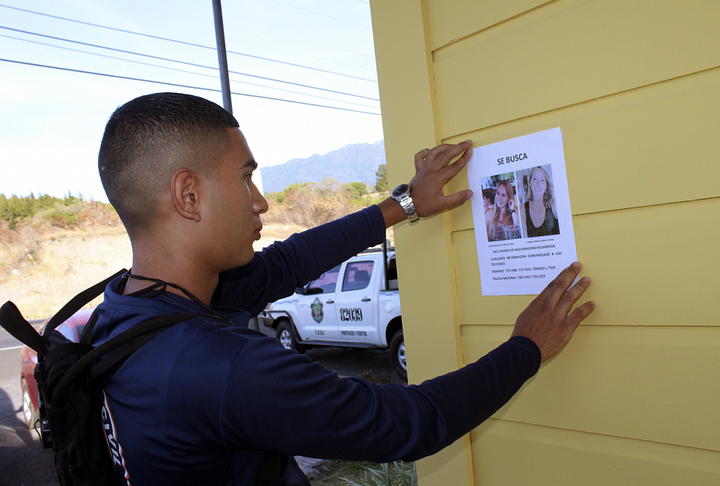
The families of both Kris and Lisanne hadn’t heard from their daughters since April 1st. Before that date, the girls had been in daily contact with their families. Hans characterises his daughter and her friend as responsible, down to earth girls who do not easily run into trouble. If they deviate from their plans they always let their parents know and are serious and punctual.
Tensions were high, as a humid climate with hills and mountains on the Pianista route brought the girls to a height of 1250 meters after all, spread over a mere 3.2 kilometres. And by all accounts Lisanne was not 100% fit at that time. When their parents still hadn’t heard anything by April 6th, the girl’s parents boarded a plane along with detectives from the Netherlands. Together, police, dog units and the Dutch detectives searched the forests for a solid ten days. Kris and Lisanne’s parents offered a reward of $30,000 USD dollars, but even this didn’t bring them any new information. Nothing was heard or seen from the girls for weeks, months.
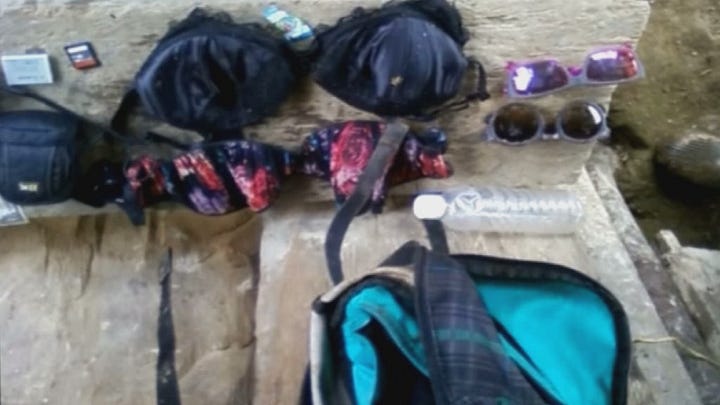
Then, after about ten weeks, a local native woman brought Lisanne’s blue Lycra backpack to the police, found in a rice paddy on the bank of the river Culebra in a remote area, nearly 8 kilometres (and at least 14 walking hours) from the location where the girls were last seen. She said she was certain that the backpack had not been there the day before.
People from the Justice department picked the backpack up with a helicopter. Police assumed it was drifted by the river to this spot, but the backpack was dry and everything in it was in good working order. It was a simple, non-waterproof backpack from cheap fabric, that under normal circumstances would have gotten wet, not to say soaked while being in the fast flowing river for long, so this was a mystery to all involved in the case.
It had been raining heavily in the prior few weeks, and the backpack did not look like it had spent weeks in a super wet, muddy jungle. It had in fact endured — without any signs of wear — over 72 days in a highly humid rain forest. This backpack also contained the first clues about what might have happened to the girls. In it were two neatly folded up bra’s, two simple pairs of sunglasses, an empty water bottle, both girls’ mobile phones (a Samsung Galaxy from Lisanne and an iPhone from Kris), a digital camera — a Canon powershot SX, Lisanne’s passport, Kris’s medical insurance card and 83 American dollars.
It is stated that as many as 34 different fingerprints were found; 13 on the backpack, 12 on the phones and the camera, as well as 6 different ones on the bras. Researches could determine that two of the fingerprints were from two unknown women and that one DNA sample contained genetic material of two unknown persons. However, no leads were followed up in reference to the Native individuals.
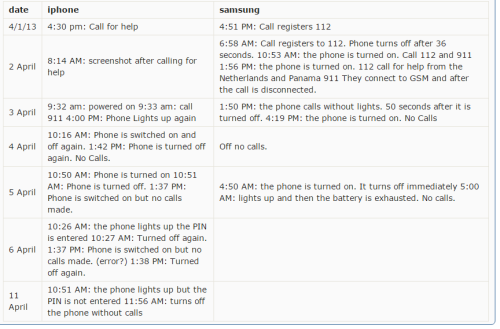
The data on the mobile phones now allowed investigators to gather a sense of what unravelled on the day the girls were last seen. The phone records showed that within hours after the start of their hike, the girls were in trouble. Around four thirty nine P M, when it was still light, a first attempt was made to call emergency services. Around ten minutes later a second attempt was made. They used both the Dutch emergency number 112, and they later dialled 911, which isn’t only the American emergency number but also Panama’s emergency number for ambulances. Unfortunately, to poor reception, their calls did not connect. Then they switched their phones off and tried calling again 14 hours later. In the days that followed, more attempts to dial emergency services were made.
On day 2 of their disappearance, Wednesday April 2nd, calls were made at 06:58 am, through to 13:56 pm. Both phones were used alternatively. This is also the only day when one of their calls made a short connection. During the first call attempt that morning, at 06:58 am, Lisanne’s Samsung phone managed to make connection with 112 for 1 to 2 seconds. Then the connection was broken off again and the phone was switched off after approximately 36 seconds.
Between the last call of day 2 and the first call of day 3 sit 19.5 hours. Then followed a string of attempts to just find a reception signal, mostly following a specific pattern of daily times. The phones never again make a connection though, and over time the phones were used less and less to try to call emergency services.
They were only switched on and off again now and then. On day 5 the battery of the Samsung phone from Lisanne dies and the phone was no longer used after that. The iPhone from Kris was however switched on and off until April 11th, which is a very long time for a smartphone, battery wise. Especially considering Dutch Forensic investigators have confirmed that both the phones had only 50% battery life on day 1, by the time the girls walked up the Pianista Trail.
Then suddenly on day eleven, at April 11th Kris’ iPhone was switched on again at 10:51 am and stayed on for one hour. That is the last time it was used. Also important to mention: on day 6, when Lisanne’s Samsung Galaxy battery had died, there were suddenly multiple attempts to activate Kris’ iPhone. However; the wrong PIN code was entered, several times, indicating that Kris was no longer able to operate her phone or did not have possession of it. Overall, there were 77 wrong attempts to access the iPhone.
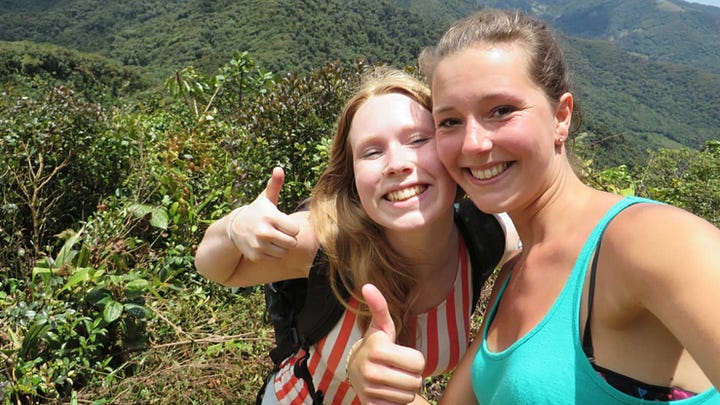
Then there was the digital camera in Froon’s backpack .The camera was also found in good condition, with remaining battery life and researchers were able to view around 133 consecutive photos. The first photos showed the girls in good spirits on April 1st, confirming that the women had taken the Pianista trail. The girls took photos of each other and the weather was good; sunny and clear. These first photos show them walking up the trail.

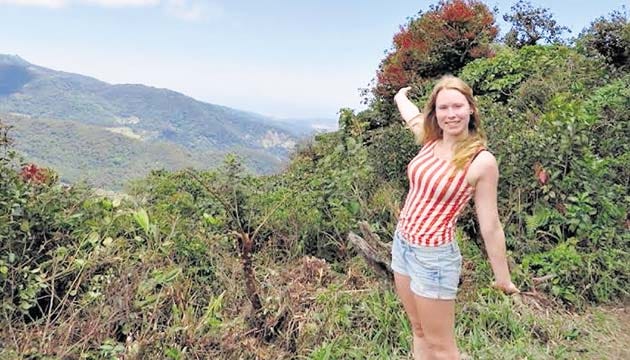
Then the next set of photos on the girls’ camera established precisely that they were at El Mirador, a lookout on the El Pianista Trail, at the summit of the Continental Divide. Experts have said that they could determine from the sun’s angle that the photos were taken at approximately 13:00 pm. But there is some controversy about these times, due to multiple witness statements placing the girls around 14:00 pm at the start of the Pianista trail.
Normally tourists turn around at this lookout point at the top of the Pianista trail, to walk the same path back to Boquete. These days there are signs placed at the top, warning people not to keep walking further without a guide, because there is more treacherous terrain ahead. We don’t know why they didn’t just return to Boquete the same way they came. We can only see the photos they kept taking, showing they wandered on, to what is called the Caribbean Descent.
Not that walking on was some sort of abnormality, or risky business, the trail is used by locals and their cattle and tourists alike to see more local beauty spots, from natural tunnels to streams and a small waterfall and cable bridges. But it was not the way back to Boquete, but instead a road further away from it.
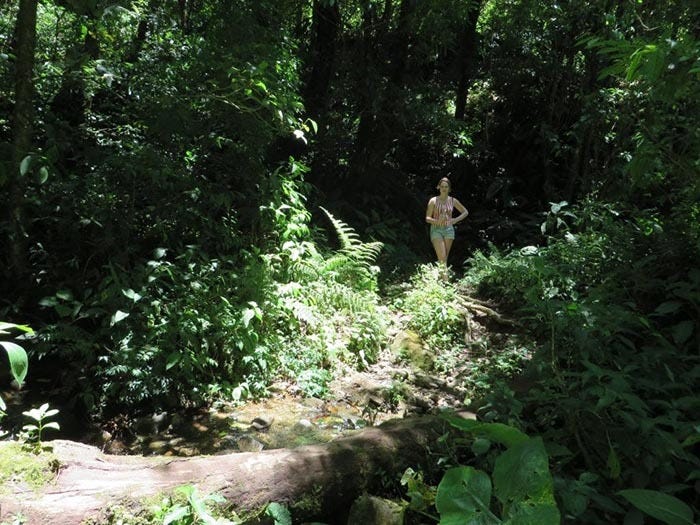
Photo IMG_491 shows Kris with a stern look on her face, holding a water bottle in front of her. This one is taken a little bit before the summit.

Photo IMG_493 is said to show the trail up the Il Pianista, around 700 meters before the highest (Mirador) top. It was taken at 12:42 pm. Then follows a string of selfies on the Pianista summit.
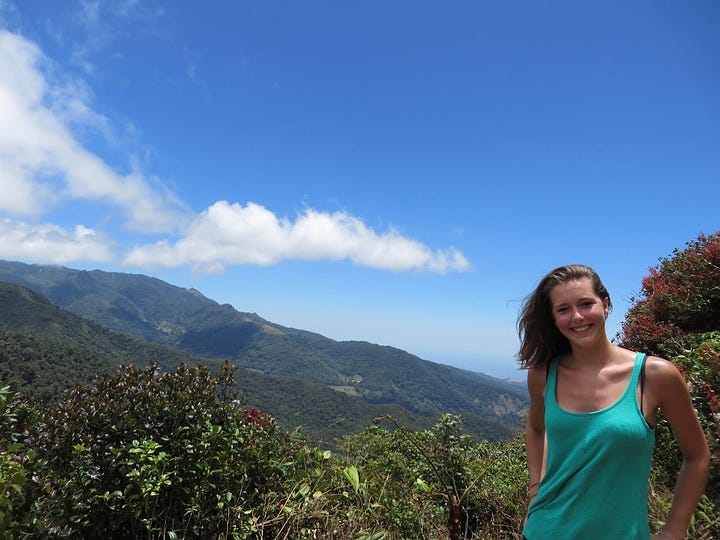
Photo IMG_499 is the first confirmed next photo number linked to a specific photo, and it shows Lisanne smiling on the top of the mountain, the Mirador, at 13:01 pm.
Some people commented on the strange way in which her body seems stretched in this photo, and out of proportion, making some people believed there has been photoshopping done on this photo. A Dutch photo specialist has looked into this case and has told of the extent of photoshopping he thinks he detected on the leaked photos of the girls and their trip.
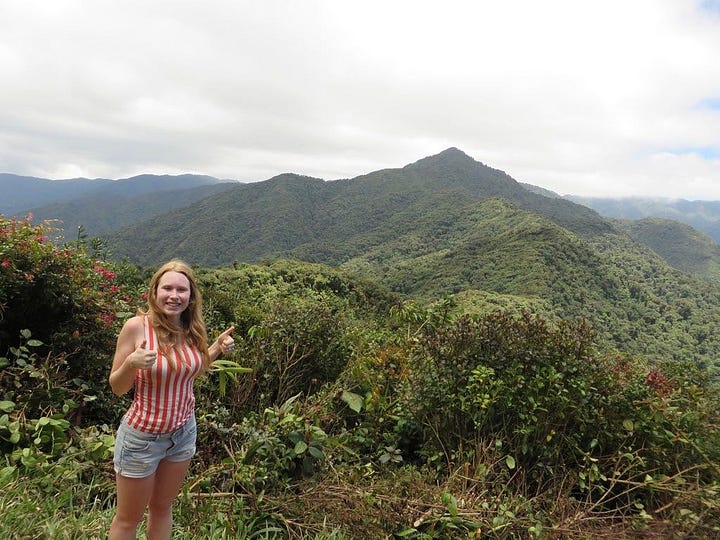
Six seconds later image 500 is taken. It is not known how the clouds can look so different between both photos, even though all images at the summit were taken within a 6 minute time frame.
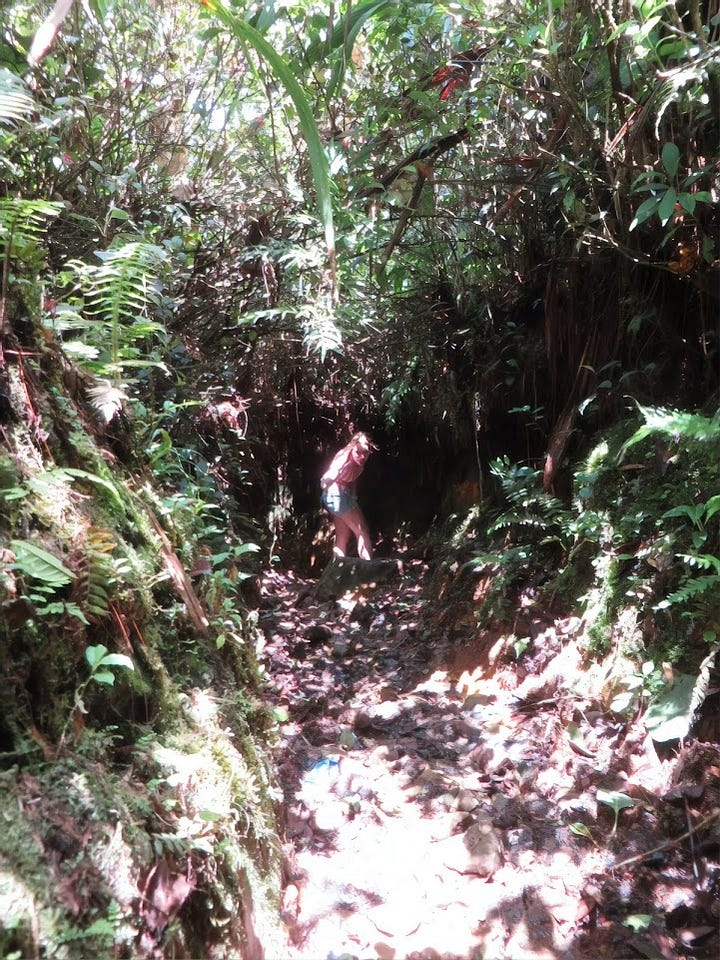
By the time they were done taking summit selfies, the girls did not return back to Boquete, instead, they continued to walk on, past the summit: image 505 shows Kris with her arms folded behind her back, looking around; this one is taken after they walked straight on, further into the jungle.

The time is now 1:20pm. Around this time, the connection of their mobile phones was cut off as they had ventured too far from the summit. Then image 507 shows Kris crossing a small stream, seen from the back again, at 13:54pm. Eight seconds later, image 508 is said to be taken.

It is the last photo taken by the girls. However, strangely enough there are two versions of photo number 508: one shows in its metadata that it was taken 8 seconds after photo 507, but another version of the same photo states that this last photo of Kris looking backwards was taken 50 seconds before the previous photo of her passing the creek. Of course, with her general direction of movement being forward and not backwards, this makes no sense. It is strange that two different versions circulate. A photo specialist explains that he thinks that he can link it to photo manipulation by a 3rd party.
The fact that no more daytime photos were made on April 1st after the stream image, number 508, could implicate either that they kept walking and got lost or ran into some sort of trouble which prevented them from making any more photos.
With the sun setting around 18:40 pm that day, this means that Kris and Lisanne should have turned around to walk back to Boquete at 4 pm at the latest. Although that would have been already risky, and 3 pm would be a better time in fact. It could explain possibly why the girls kept walking after having reached the summit (“plenty of time”) around 14:00 pm, but panicking at 4:39 pm.
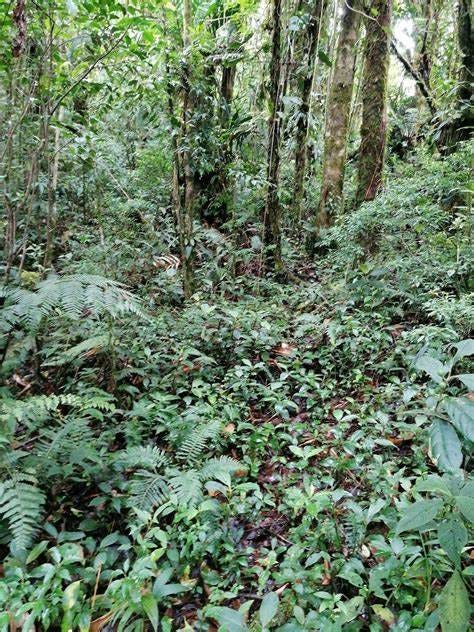
The Pianista trail is a clear path, but once you walk on, paths eventually become small trails, poorly maintained and the jungle closes in. But not unless you walk on for a very long time; initially the ongoing path is clear to follow and surrounded by stone walls that make it impossible to divert from this one and ongoing trail. Many believe that the reason why Kris and Lisanne started calling emergency services shortly after 16:30 pm, whilst it was still daylight, may be because they were followed by someone, who forced them deeper into the jungle. Because if they had been ‘lost’ at that point, the obvious and most logical thing to do for them would have been to simply turn around. There was one path to follow. So why didn’t they?

These are the last photos for a long time, because for a whole week afterwards, no more photos were seemingly made with the digital camera. Until April 8th, when over 90 strange night-time photos were shot between 01:00 am and 04:00 am, showing mostly all darkness and vague natural surroundings. But now it gets more eerie; there is one missing photo, originally sitting just between the daytime photos and the mysterious and ominous night-time photos made a week later.
The camera automatically numbers the photos taken, and #509 is missing. Dutch specialist teams have tried everything to get that one deleted photo back, which normally is not a big problem when an image is manually deleted. Hackers and IT specialists have special software that can retrieve such photos, because pressing ‘delete’ does not usually mean the whole file is actually erased. Yet despite a team working on it, they could not find the missing photo on the camera.
Some people suggest that the girls ran into the wrong crowd, and may have made a photo of someone who did not want to be identified. It is of course also possible that the Panamanian authorities took photo 509 off the camera themselves when they first investigated it, because something incriminating was on it. Something they wanted to hide from the world.
Others suggest that they Kris and Lisanne themselves may just have removed an unsuccessful selfie. Aside from the fact that manual deleting would not have erased the file permanently; when in a state of panic or at least restlessness would they really bother to delete a photo simply because they didn’t like the way they looked in it? People have suggested online that one of the girls may have deleted this one photo to make more space for the 90 plus dark night-time flash photos. But the memory card had plenty of space and besides, why delete one photo, number 509, sitting in between so many normal day time hiking photos? That theory makes little sense.
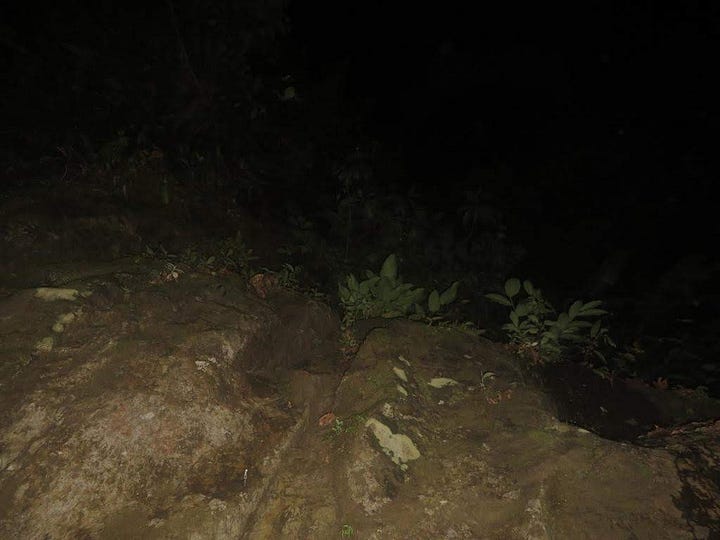
The night-time photos are still unexplained. And this is when things get really eerie. I have been haunted for some time by these photos, and their possible implications. They were found on the digital camera of Kris and Lisanne. And they were taken on April 8th, so at least a week after the girls got lost and a week after their last known photo was taken. On average one picture was taken every two minutes, for the duration of 180 minutes.
The first photo of this series that we know of, shows a nightly landscape with rocks and bushes. This photo has number 542. It was taken at 01:38 am. The person who took this photo seems to look down from the top of a rock into bushes and darkness.

A second photo shows red plastic attached to small sticks placed on a rock and with what looks to be two chewing gum wrappers next to them. This photo has number 550 and was taken at 01:39 am. On the photo that shows the content of the backpack that was found months later, you see a similar looking wrapper lying above the black bra, possibly still closed with its content. Some people suggested they may have waved with these red DIY flags to sign a helicopter flying over, perhaps intended to be some sign of life from Kris and Lisanne; some sort of marker of where they were.
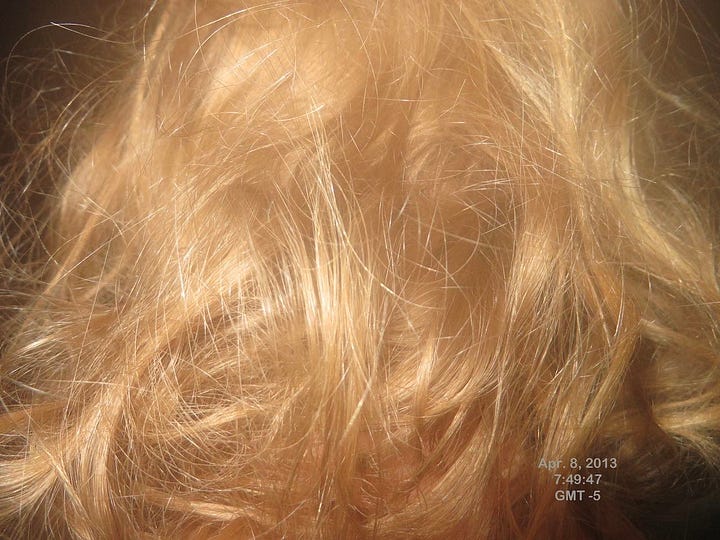
The third and most alarming sight, was a picture of the back of Kris’ head. Kris’ hair also looks dry. Many night photos show rain drops falling down from the dark sky, but Kris must have been sheltered somewhere, because her hair isn’t wet. This 3rd photo has number 580 and was taken at 01:49 am.
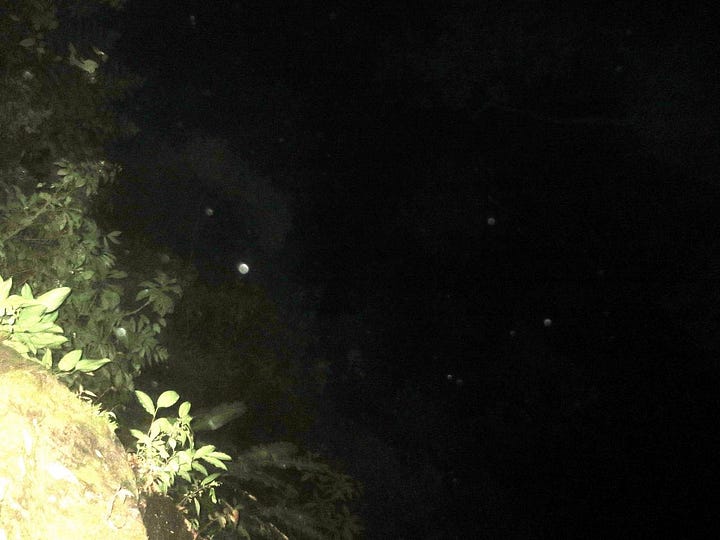
This fourth photo shows the edge of what seems to be a rock or plateau, perhaps a cliff, and rain drops reflecting in the flash (although it may also be reflecting dust particles in the air instead; after all, the camera lens seems clear of any water drops).
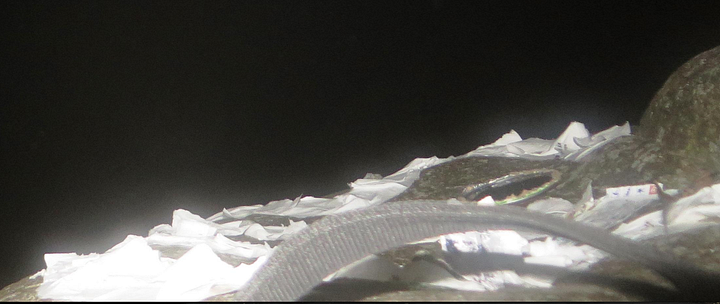
And finally there is a 5th photo. It surfaced years later in fact, in 2016. It is a photo where the flash lights up pieces of scattered around toilet paper, a mirror and a strap. They are all placed on a rock. It was Jeremy Kryt, the Daily Beast journalist, who first printed this photo in his online article on this case. He wrote that the toilet paper was used to form some sort of SOS sign.
No fully satisfactory explanation has ever been given for these pictures, although there are many suggestions made. For instance that Lisanne was trying to capture proof of Kris’ body and its location in the middle of the night.
The leaked night shots make it clear that whomever took these photos, did not walk around, but kept making photos of the same static place in nature. It is also possible that someone flashed the camera to attract attention; from search operations. But helicopters did not fly in the depth of night. Also possible perhaps, is that the girls heard strange sounds in the vicinity and used the flashlight to scare off animals in the dark.
Did the girls even take those photos themselves? We have no proof that they did: no selfies were made…. We see nothing that identifies the person who made the photos: no distinguishable hands or hair hanging in front of the lens for instance. What we do have however, is Kris’s strawberry red hair being pictured; so at least she must have been there that night… Right? That is, unless the photo times and dates were meddled with of course….

Journalist Jeremy Cryet also stated that the night-time photos were “across the bridgehead over the Rio Culebra, featuring a three-cable span, or “monkey” bridge, that stretches across the river about 25 feet above the rapids. Unless they were actively chased by something or someone, I find it hard to believe that the girls would voluntarily and without a pressing reason decide to cross a river and wonky cable bridges in the dead of night.”
Tourists who walked the same trail described them as follows: “We crossed three rivers on these cable death-bridges. I inched across, terrified each time. On the first death-bridge I was so scared my shaking legs made the cables wobble, my friend made fun of me for hours — and didn’t mention until later that a local had recently died on a crossing.”
Some of the images are “sharp and clear” in a way that they have been marked as “deliberately intended to show a specific image.” “She might be trying to use the camera to tell us something she thinks is important,” Weit, a wildlife expert says. “Something that went down that night, and she wanted to record it for her loved ones or whoever else.”
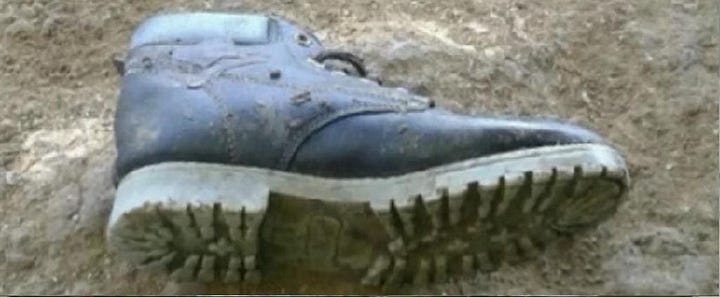
Shortly before June 19th, 2014, With the help of six native Ngobe people, a local guide then found bone remains, jeans shorts and two different shoes along the river Rio Culebra. The jeans shorts were said to have been found on top of a rock, neatly folded on the opposite bank of this Culebra: River of the Serpent, at least 8 walking hours away from Boquete and several kilometres away from where Froon’s backpack had been discovered. Although later the very people who found the shorts would claim that they in fact found the jeans not neatly folded at all, but floating in the river itself.
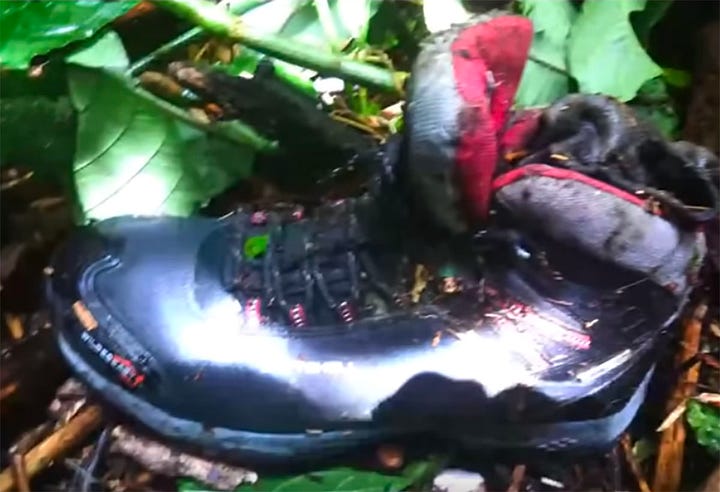
Bone remnants were found several walking hours away again as well, further up north. On June 19th, officer of Justice Betzaida Pitti confirmed that — indeed — human remains had been found in the search for Kris Kremers and Lisanne Froon. One of the shoes found contained human bones: a foot, still protected by its boot. The laces were still laced tightly and it also had a sock still inside it, containing the foot which still had some skin and meat on it. The brown shoe found in the jungle turned out to be from a Dutch brand called Wildebeast. It is only sold in PerrySport shops in the Netherlands, and soon proved to be Lisanne’s. At least 33 widely scattered bones were also discovered along the same river bank, of which most fragments came from one left leg, also belonging to Lisanne.
On June 20th 2014, the girls’ families made a public statement, telling the public that they had strong reasons to believe that the girls had passed away. Up until then, they had always sounded hopeful that their daughters would eventually be found back alive.

Then on August 29th of 2014, more remains were found in the jungle: more small bony remains of the girls and a rolled up ball-shaped piece of tissue (skin) that turned out to belong to Kris was found. Strangely enough, the forensic pathologist later found that the skin was still in an early state of decomposition. It appeared in stark contrast with Kris’ fully bleached and clean bones. The pathologist also found out that the bone marrow in the femur and tibia bone from Lisanne proved to be dry and was not decomposed. The forensic pathologist thinks also that the piece of skin was manipulated.
The foot from Lisanne showed to have been broken in many places; consistent with a fall from great height’, investigators stated. The periosteum of Lisanne’s foot showed signs of inflammation, something scientists linked to strenuous use or overexertion of the foot. Frank van de Goot explained that this type of injury can for instance be caused by very strenuous long distance walking, and is also seen with marathon walkers who haven’t trained long enough.
Unlike Lisanne’s foot bones, Kris’ bones also contained a high concentration of phosphates, which are linked to chemical bleaching procedures. Soil samples taken by Dutch investigators from the spot where the bones from Kris were found, showed that this phosphorus was not present in the soil naturally.
Both set of bones seem unnatural in their state of decomposition. The contrast between Froon’s bones still having intact skin on them, but Kremers’s bones being squeaky clean and without any body tissue remnants is a stark one. For a piece of skin to be found intact months after passing, while out in the animal-infested and humid open air jungle is peculiar. Kris’ bones looked like they had been decomposing for 2 years instead of just over 2 months. Her bones looked like they had been baking in the hot sun for a long long time. Not as one would expect from bones having been shielded from the sun in the cloud forest jungle, around 9 weeks after their suspected death.
It seemed clear by now that the girls were dead, but how did their bones get dislodged and spread out over the area? Forensic teams states that “No claw marks, No bite marks from the fangs of animals. No marks that would indicate they had been broken up on river rocks either were found on the bones- something you would certainly expect to see if the bodies had bounced over rocks and swept through wild rivers. The same goes for the backpack and its delicate contents.
the director of the Colorado Wilderness Medicine School, Carl Weil, stated:
“After 2 months the bone should not be bare, but still covered with significant amounts of flesh unless of course there was human intervention.”
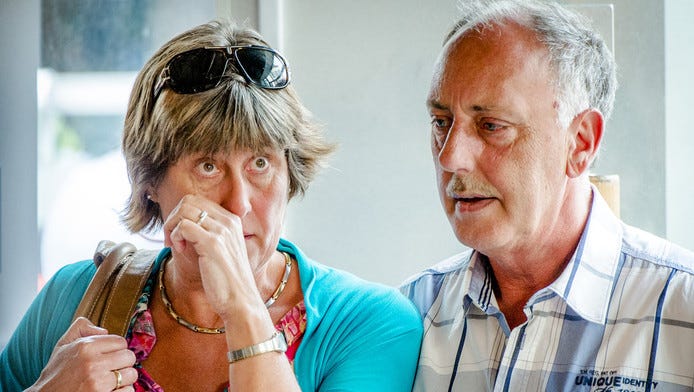
The parents of both girls later took the same trail in an attempt to find answers and lead their own investigation into the sinister case. The parents say that they did not see or pass any dangerous spot where you can slip, or fall, or injure yourself in any serious way. No ravines, no steep descents. The parents of Kris therefore think that between the river spot where the last picture was taken and the meadow, something strange must have happened. They hint at foul play here.
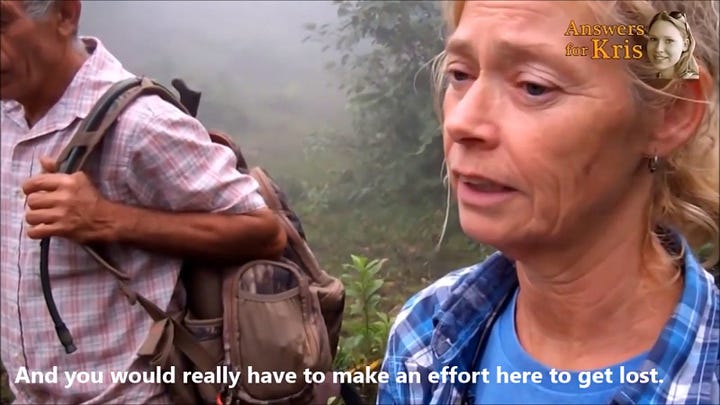
Kris’ parents are convinced the girls did not voluntarily walk on for days. They refuse to believe that Kris and Lisanne got lost, after seeing for themselves that after you reach the top of the Pianista trail, the path continues on for kilometres in a clearly visible and safe manner. And by 4 pm the girls would have surely turned around and walked the same trail back normally, knowing how long the walk up until then had taken them. Kris’ parents do not believe that the girls would have ventured off the path. “They wouldn’t be so stupid” …”You’d really have to make an effort to get lost here”.
We may not ever find out what happened to Kris Kremers and Lisanne Froon, but what we do know is that something went very wrong on that hiking trail and whether the girls were injured, lost or preyed upon in their vulnerability, what we do know, is that a time that should have been one of the most happy and unforgettable in their lives, will now remain a painful memory in the hearts of those that loved them.
Comments
Post a Comment